 AI health coach
A coach you can speak to, type to or show your plate
A GLP-1 coach across voice, text and camera, designed through three iterations around how people actually live with the medicine.
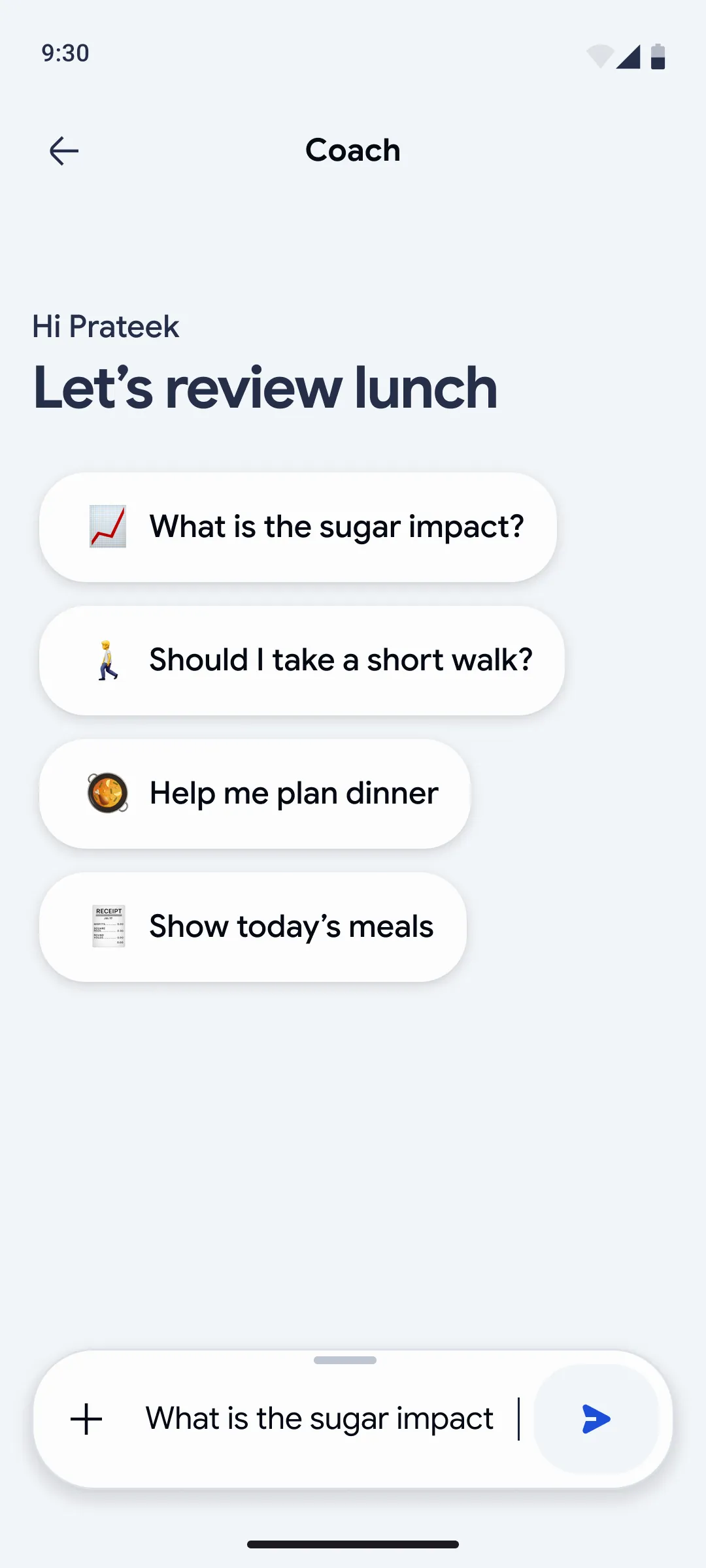
- RolePrincipal Product Designer & Design Engineer, contract
- TimelineJan 2025 to Aug 2026
- ModesVoiceTextCamera
Scope
- The coach experience, across three iterations
- The engagement model and the nudge types
- What the coach starts on its own, and what waits for the person
- PProduct
- MML engineering
Why it mattered
GLP-1 care happens between doctor visits, so the coach is the daily reason to open the app.
The problem
One coach could not serve a newcomer and a long-time user, and typing was the wrong ask on a bad day.
Context
The company, the people, the goal
WeightEasy is Tap Health's GLP-1 weight care app. Once dose tracking became routine, people opened it for a reminder and closed it again, so the coach had to become the daily reason to come back.
Who it was for
- People in their first weeks
Reassurance that side effects like nausea are normal, and simple guidance, not feature-heavy screens.
- People at a plateau
To know whether to change meals or activity when the weight stops moving.
- Long-time users
Their logs turned into what to change next, with fewer and sharper check-ins.
What success meant
- Business goal
Make the coach the daily reason people open WeightEasy, through the early months when retention is decided.
- User goal
Guidance for how I feel today, given in whatever way I can manage right now.
Research
What we did to learn, and what we learned
- Interviews across the journey
In-depth interviews with GLP-1 patients, from their first days on the medicine to long-time users, on routines, meals and what support means at each stage.
- Engagement data
WeightEasy retention curves and feature use, read for when people stopped opening the app and what they stopped doing.
- Patient forums
GLP-1 communities on Reddit, read for the gaps people describe between doctor visits: meal confusion, side-effect worry, feeling alone.
- Coaching app benchmark
Compared coaching apps, among them Noom, Calibrate, Lark and Found, on medication awareness, proactive outreach and input modes.
- Anonymous survey
A Tap Health survey of GLP-1 users on the app features they value, why they quit apps, and their hardest challenge.
- 01
Engagement faded once the dose became routine
How we knowRetention curves showed daily use falling after the first few weeks, once tracking the dose stopped feeling new.
What it changedA 5-stage model gives each phase of the journey its own reason to open the app.
- 02
The daily question is what to eat right now
How we knowIn interviews, meal questions were tied to how the dose felt that day, nausea or no appetite, not to calorie counts.
What it changedCamera and voice became first-class inputs, and the coach answers from the plate in front of the person.
- 03
Good advice depends on the dose day
How we knowPeople found advice that ignored where they were in their cycle frustrating. The survey ranked medication reminders first, ahead of AI coaching and food logging.
What it changedNudges are tied to the medication cycle day, so the coach starts from the dose.
- 04
People wanted a coach that checks in first
How we knowIn concept validation, check-ins the coach started did better than features people had to open themselves.
What it changedTwo modes, coach-led and person-led, with 11 nudge types rationed between them.
Principles
The rules every screen followed
- 1
Meet the moment
Accept whatever the person can give right now: a word, a voice note, a photo or a file.
- 2
Proactive, but rationed
The coach starts a conversation only when the dose cycle says it matters.
- 3
A companion, not a menu
One ongoing conversation instead of a menu of cards, so it feels like someone who remembers.
Process
- 01
Find the drift
Where engagement dropped, and who it lost.
- 02
Stage it
Five stages, from first habit to mastery.
- 03
Ration nudges
11 types, coach-led and person-led.
- 04
Iterate three times
Cards, then one conversation, then voice and camera.
Key decisions
Decision 01of 03
Stage the relationship, not features
A newcomer and a long-time user need different coaching. Five stages unlock depth as people progress.
- Stage 1FoundationBuild the daily habit
- Stage 2ConsistencyFrom tracking to acting
- Stage 3PerspectiveTrends across weeks
- Stage 4OptimisationMeal swaps and plateaus
- Stage 5MasteryFewer, smarter nudges
Decision 02of 03
Voice, text and camera as equals
Meals happen with a plate in hand, sometimes on a bad day. One input bar takes speech, text, photos and files.
Log anything in one tapSpeak instead of typing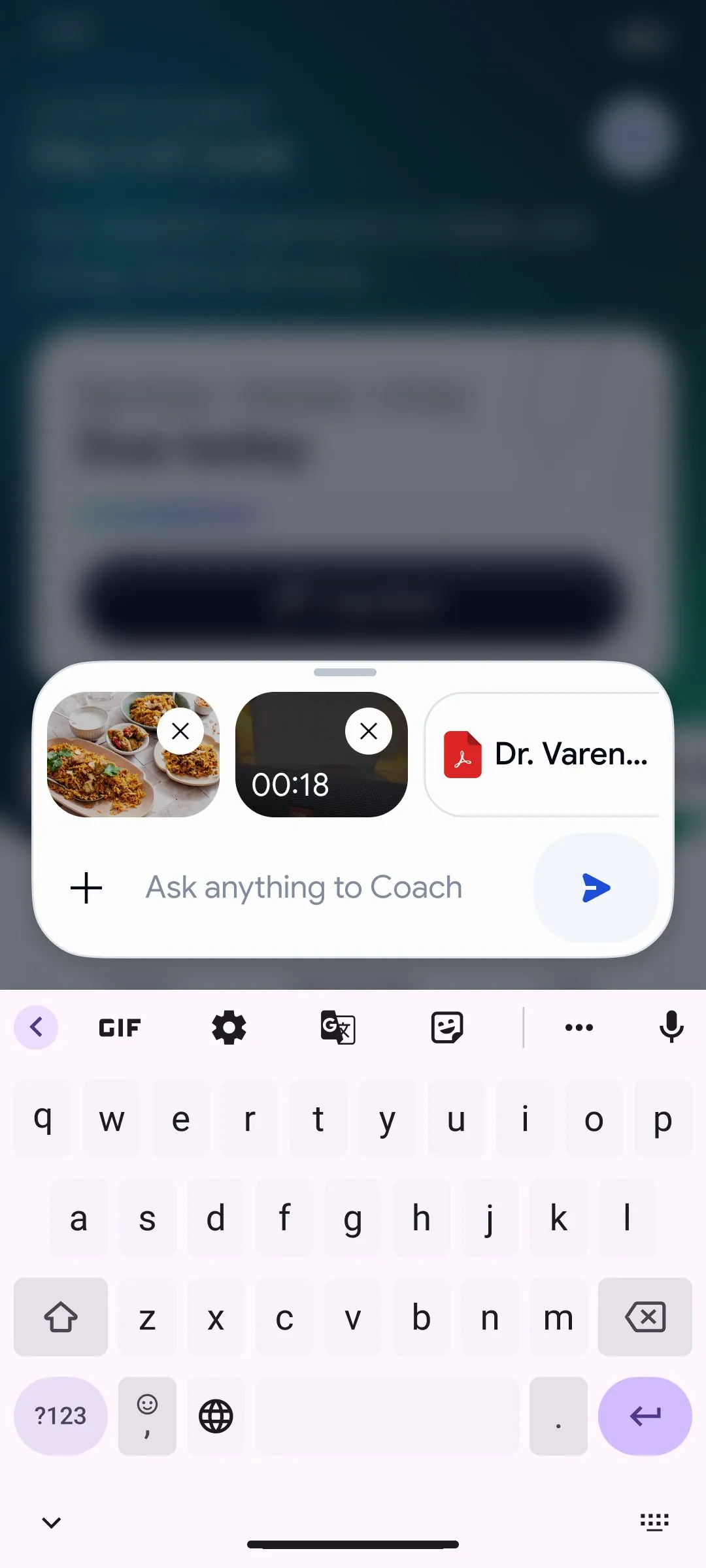 Photo, voice note and a report
Decision 03of 03
Show the thinking, answer the plate
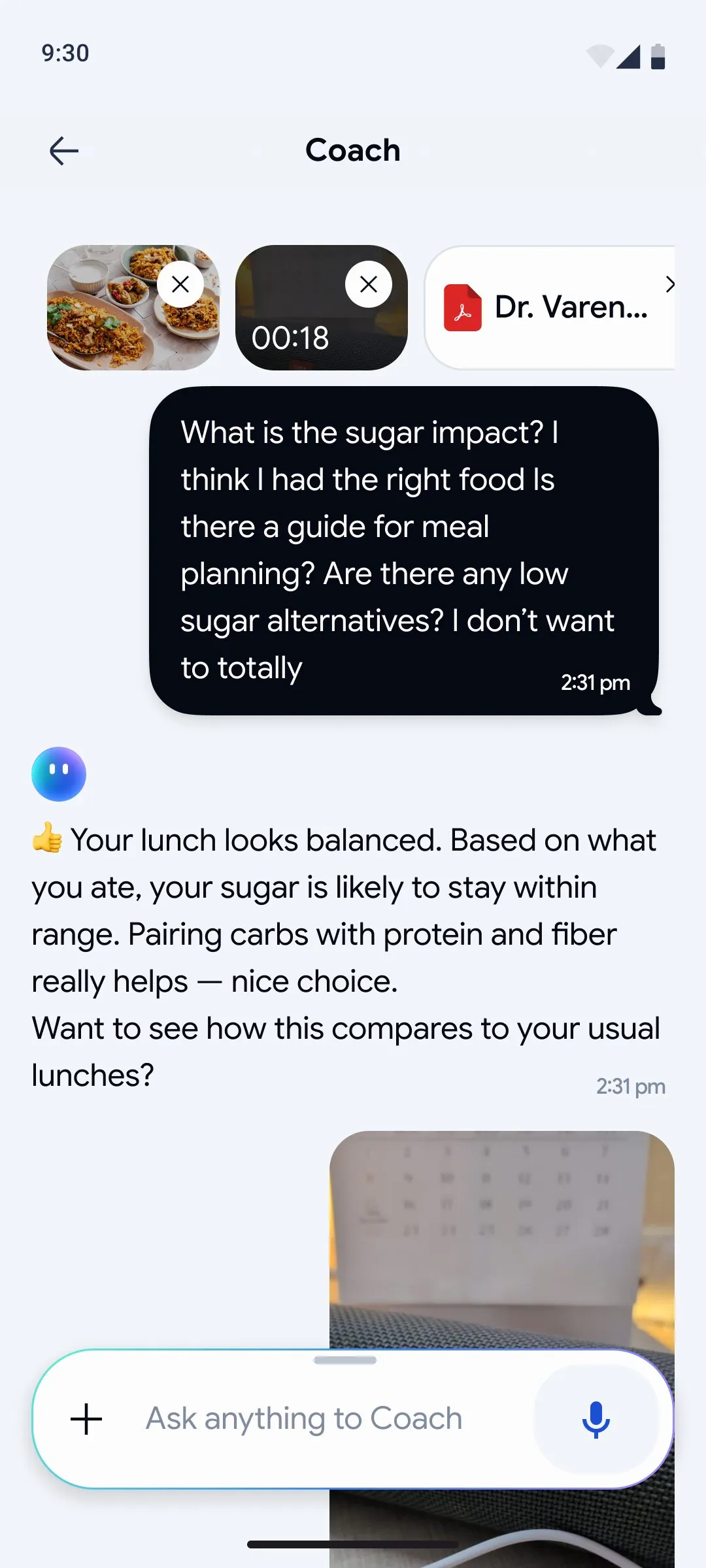
People send a photo, a voice note and a report together. The coach says it is thinking, then answers from what they sent.
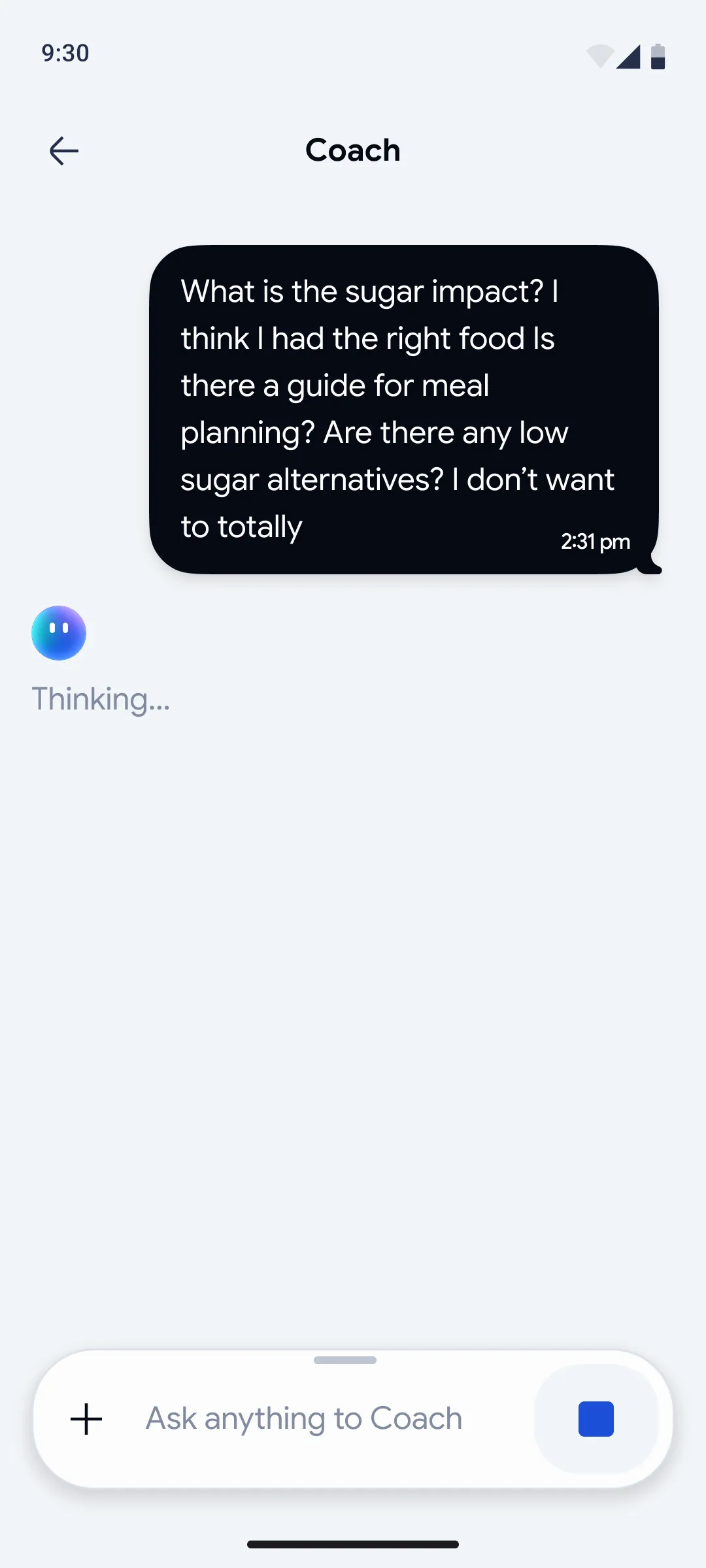 Says when it is thinkingAnswers from the plateEnds on a next question
The journey after
End to end, as it shipped
- 1The coach reaches out
A check-in tied to the dose day arrives as an unread message.
- 2It opens on what just happened
A welcome with suggested questions, such as help me plan dinner or should I take a short walk.
- 3Ask any way
Speak, type, or attach a photo, a gallery image or a file, all from one input bar.
- 4The coach shows it is thinking
A visible thinking state while the answer is prepared.
- 5An answer from what was sent
The reply reads the plate, the voice note and the report together, and ends on a follow-up question.
- 6Act on it in one tap
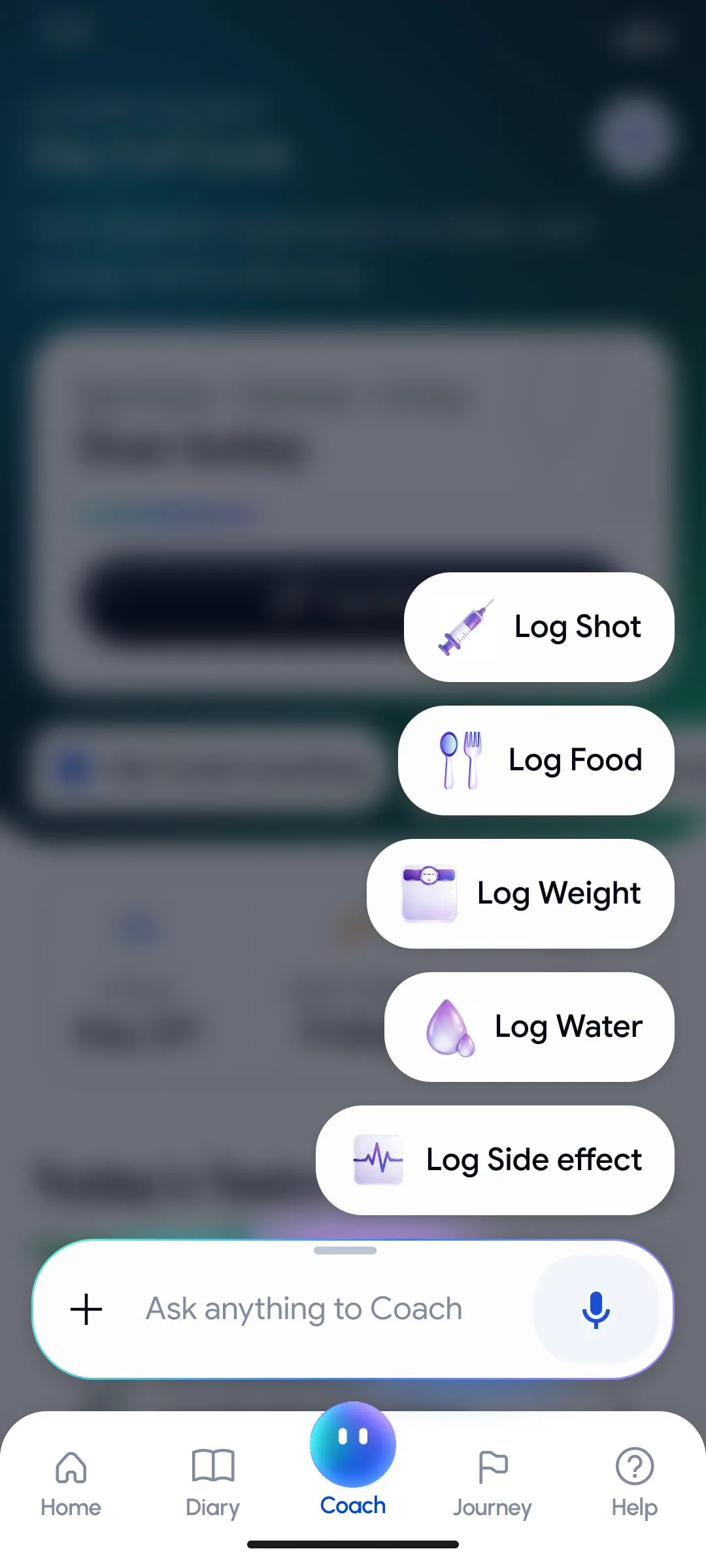
Log a shot, food, weight, water or a side effect from quick log, or edit a meal with AI for a healthier swap.
- 7The coaching deepens
Daily insights unlock more as logging continues, and the coach moves through the five stages.
Edge cases
Designed for the messy moments too
- Coach-led message waiting
A nudge tied to the dose day arrives as an unread message, so it reads as a check-in rather than an alert.
- Thinking
After a question the coach shows a visible thinking state, so a slow AI reply never looks like a frozen screen.
- Speaking instead of typing
Invoke, then Start speaking, with the words transcribed live as the person talks.
- A long message
The input bar grows from one line to several as people type, and the conversation stays in view.
- Several things at once
A meal photo, a voice note and a doctor's PDF can sit in one message, each previewed before it is sent.
- Not much logged yet
Daily insights start simple and unlock in stages as logging builds, with an Unlock more prompt instead of an empty card.
Trade-offs
What we said no to
Not this
A chatbot menu of fixed cards
Instead
Three iterations moved it to one conversation people can speak, type or photograph into.
Not this
Nudges on a marketing schedule
Instead
The coach reaches out when the dose cycle says it matters.
Outcome
Three iterations converged on one conversation people can speak, type or photograph into.
Coach-led check-ins and person-led questions now run through the same conversation.
- 3Design iterations, from cards to one conversation to voice, text and camera
- 5Stages in the engagement model
- 11Nudge types, coach-led and person-led
- ShippedScreens across the coach, meal intelligence, daily insights and food logging
What outlived the project
The single input bar for voice, text and camera is how people talk to the coach.
What I don't claim. This case shows design work. I don't quote an engagement lift for the coach.
Reflection
Looking back
What I learned
- A conversation beats a menu. Moving from structured cards to one thread made the coach feel more human, so later versions kept it.
- Proactive matters more than clever. A coach that waits to be asked loses to daily life; one that checks in at the right dose moment gets a reply.
- Multimodal is about context, not features: wet hands while cooking, a plate at a restaurant, a desk for planning.
What I would do next
- Instrument the coach the way activation was instrumented, so the next version can be judged on retention, not only on design.
- Test the stage boundaries with real cohorts. The stages came from interviews and retention curves, not from measured coach use.
 From paper forms to the app that carries the sale